

Learning about pigmentation and how to prevent it
Written by Geelda Raoofi
Today we will be learning a bit about the different types of hyperpigmentation and what we can do to treat and prevent. What is hyperpigmentation? This is an over production of pigment. The opposite of this would be called hypopigmentation (lack of pigment). These are two of the most common pigmentation disorders. Hyperpigmentation affects 50%-80% of the population depending on your ethnicity, lifestyle, and the climate. Sun exposure is the biggest external cause of pigmentation disorders and can make existing pigmentation disorders worse. Another thing that can cause skin pigmentation abnormalities is certain drugs. Pigmentation may be induced by a wide variety of drugs; the main ones implicated include non-steroidal anti-inflammatory drugs (NSAIDs), phenytoin, antimalarials, amiodarone, antipsychotic drugs, cytotoxic drugs, tetracyclines, and heavy metals.Hyperpigmentation appears in the following forms:
-
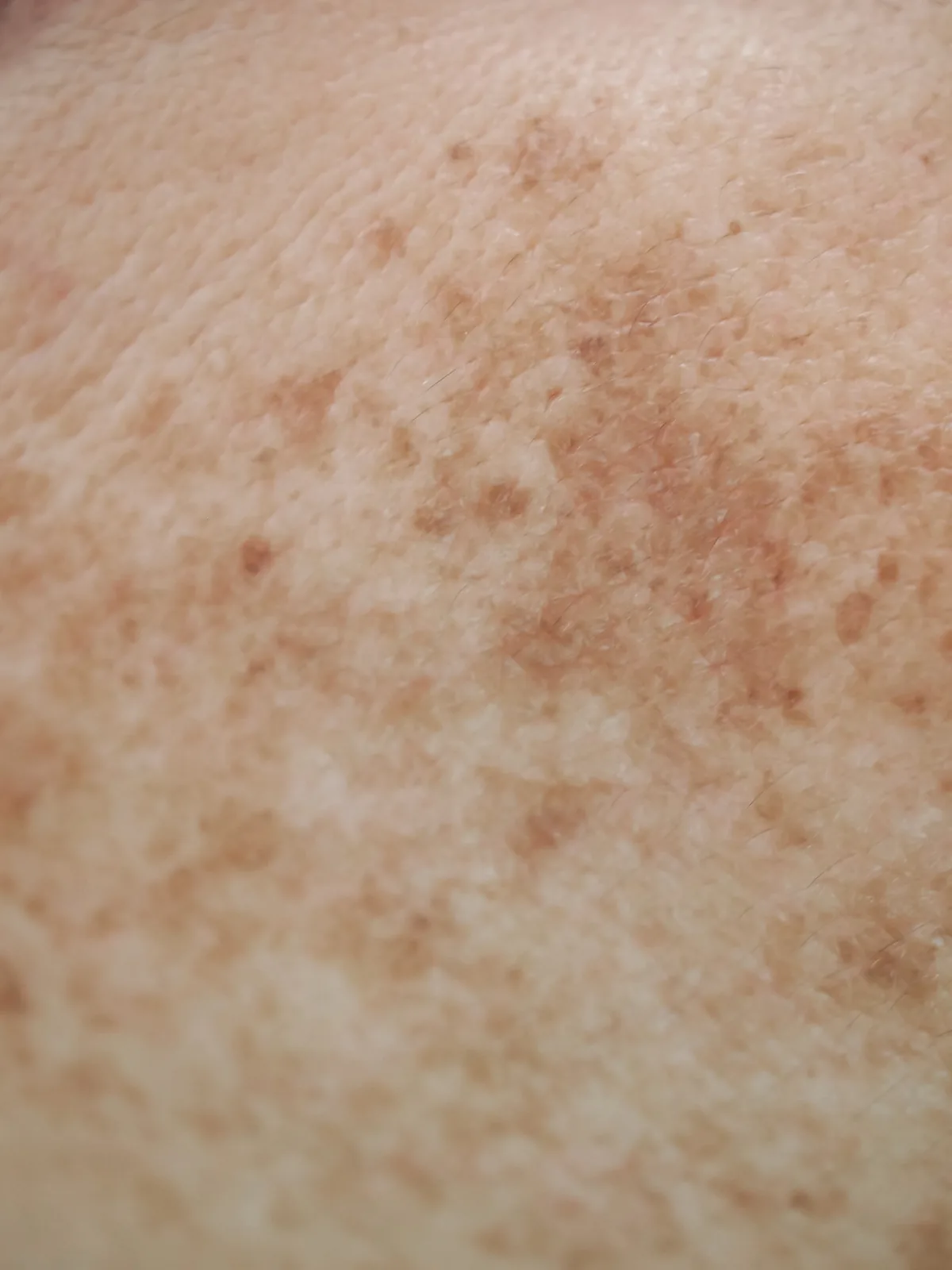
Ephelides: This is the medical term for freckles. We see this type of pigmentation a lot. Usually, people who have low melanin (substance in your body that produces hair, eye and skin pigmentation) are very fair skinned and prone to getting freckles. These lighter skin types are at higher risk when it comes to sun damage because they burn easily and do not tan. I personally deal with this and even when I apply sunscreen, I still get covered in freckles and never tan. It's really important to re-apply sunscreen when you are going to be out (especially when it's summer!). What else can you do at home to prevent this? Aside from daily sunscreen use, you can combine the use of Vitamin C in the morning with your sunscreen because they are a power combination. You can incorporate a retinol into your nightly routine (build up your tolerance until you are using it every night). Retinols chemically exfoliate your skin and help block the receptors that regulate how much pigment comes out of the skin. These following ingredients are great for lightening pigment: hydroquinone, arbutin, and AHAs (most common ones for evening out skintone include: Mandelic Acid, Kojic Acid, and Glycolic Acid)
-
Melasma: This is a type of hormonal hyperpigmentation that first appears during pregnancy or with the use of birth control pills. This type of pigmentation is often found on the forehead, cheeks, upper lip, and chin.
-
Lentigo: This is a flat, pigmented area similar to a freckle (small, yellow-brown spots). A lot of people call these "age spots", as they are associated with aging skin.
-
Nevus: The medical term for birthmark. This is a malformation of the skin from abnormal pigmentation or dilated capillaries that is present at birth or appears shortly after birth.
-
Poikiloderma of Civatte: This is a skin condition caused by actinic bronzing (chronic sun exposure). Poikiloderma is benign, meaning it's not cancerous.
-
Post inflammatory hyperpigmentation (PIH): This is a darkened pigmentation due to an injury to the skin or the residual healing after an acne lesion has resolved.
-
Tan: Tanning is a change in pigmentation due to melanin production as a defense against UV radiation that damages the skin. A tan is basically visible skin and cell damage.
Now that we have learned about the types of pigmentaion most often caused by sun exposure, we can learn how to treat and prevent them. Depending on the type of pigmentation you have, it's always best to do a combination of things to improve skin texture rather than expecting to see major results from one thing. For example, some people might think that going to get a treatment will make their skin amazing with minimal to no effort at home. This is not true. What you do at home, what you use at home, and consistency is what will bring you the results you want to see. It's not something that happens overnight, and it will never be a one size fits all. Now that we have that part covered, let's get into the treatments and products..
Products we carry at AE.R that help prevent and/or treat pigmentation:
Vitamin C serums:
- SkinCeuticals: C E Ferulic - Dry, Normal, Combination, Sensitive skin types.
- SkinCeuticals: Phloretin CF with Ferulic Acid - Normal, Oily, Combination skin types.
- SkinCeuticals: Silymarin CF - Oily, Combination skin types.
- SkinCeuticals: Serum 10 AOX+ - Sensitized, Acne, Aging
- ZO: 10% Vitamin C Self-activating - All skin types.
Sunscreens:
- SkinCeuticals: Physical Fusion UV Defense SPF 50 (tinted) - Dry, Normal, Combination, Sensitive skin types.
- SkinCeuticals: Sheer Physical UV Defense SPF 50 (transparent) - Normal, Oily, Combination, Sensitive skin types.
- ZO: Daily Sheer Broad Spectrum SPF 50 - All skin types.
- ZO: Broad Spectrum Sunscreen SPF 50 - Dry, Sensitized + Post-Procedure skin types.
- ZO: Smart Tone Broad Spectrum SPF 50 - All skin types.
- ZO: Sunscreen + Powder Broad-spectrum SPF 45(Available in Light, Medium, and Deep) - All skin types.
- ZO: Sunscreen + Primer Broad-spectrum SPF 30 - All skin types.
Retinols:
- SkinCeuticals: Retinol 0.3, Retinol 0.5, Retinol 1.0 - Normal, Oily, Combination skin types. Different strengths are available so you are able to gradually build up your tolerance.
- ZO: Retinol Skin Brightener 0.25%, Retinol Skin Brightener 0.5%, Retinol Skin Brightener 1% - All skin types. Different strengths are available so you are able to gradually build up your tolerance.
- ZO: Radical Night Repair 1% - All skin types. This is a high-potency retinol treatment. If you have not been using retinol, begin use gradually. The main difference between Radical Night Repair 1% and the Retinol Skin Brightener 1% is that this one contains high potency microencapsulated retinol and also contains Vitamins C, E and A, edelweiss and marrubium vulgare plant stem cells which provide antioxidant protection. Some of the ingredients differ between the two, so if you are tied between them- pick the one with more of the ingredients that you feel your skin needs. It also doesn't hurt to try them both (at separate times by finishing one and then getting the other afterwards) to see which one works better for you since everyone's skin needs and reactions are different.
Other products that help brighten and even-out your skin while keeping it supple and moisturized:
- SkinCeuticals: Discoloration Defense - Dry, Normal, Oily, Combination skin types.
- SkinCeuticals: Blemish + Age Defense - Oily, Combination skin types.
- SkinCeuticals: Retexturizing Activator - Dry, Normal, Oily, Combination, Sensitive skin types.
- SkinCeuticals: Resveratrol B E - Dry, Normal, Combination, Sensitive skin types.
- SkinCeuticals: Metacell Renewal B3 - Dry, Normal, Oily, Combination, Sensitive skin types.
- SkinCeuticals: Phyto A+ Brightening Treatment - All skin types